ChatGPT answers, it doesn't redirect. Appearing in its responses is no longer about a link's position — it's about presence in its retrieval. Here are the 7 concrete levers that make the difference in 2026. From the technical fundamentals (robots.txt) to advanced tactics (active LLM Seeding).
- 7 levers ranked from most technical to most strategic.
- The first 4 are doable without a dedicated tool.
- Lever 5 (active LLM Seeding) is the only one that creates presence at scale.
- Count 14 days of warm-up before stabilized citations.
- All 7 levers apply to all 4 models: ChatGPT, Claude, Grok, DeepSeek.
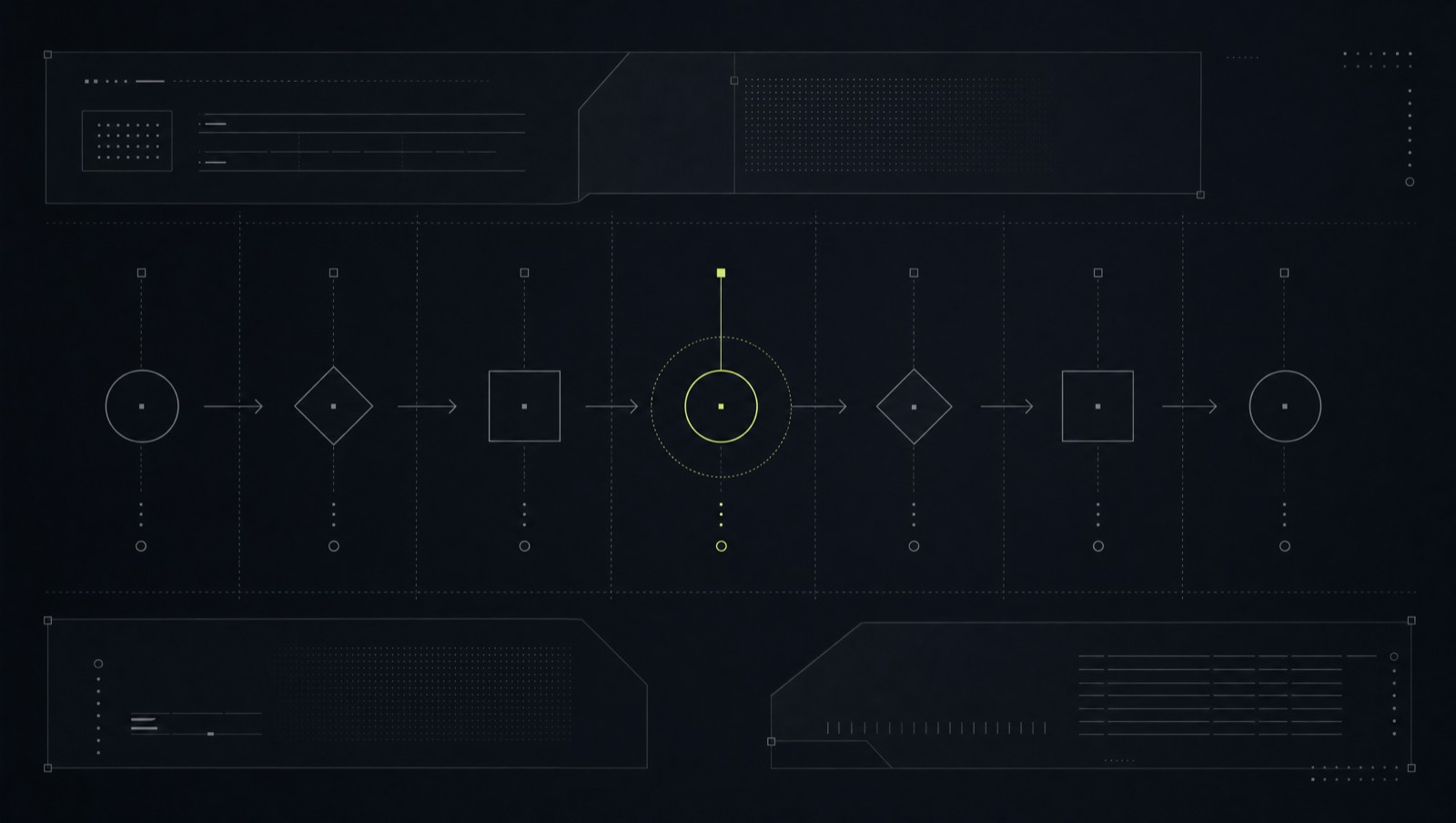
The 7 levers at a glance
Levers 6 and 7 (multi-model presence + iteration loop) extend the first 5 — detailed below.
Lever 1 — Explicitly allow AI crawlers
First step, often overlooked. If your pages block AI crawlers, you're invisible before you've even started.
curl -A "GPTBot" https://your-site.com/target-page | head -50 — if the page returns a 200 and clean content, the crawler can retrieve it. If 403 / 401 / empty content, blocking to fix.
Lever 2 — Structure pages for retrieval
LLMs consult retrieval before responding. Poorly structured text is poorly retrieved. Four rules to apply to target pages.
- 01Answer firstThe first sentence under an H2 must answer the implicit question of the H2. LLMs cite paragraphs that answer first.
- 02Systematic listsWhenever you enumerate 3 or more items, switch to a list. Listicles concentrate 22% of AI citations.
- 03Front-loaded definitionsFor each new term, an isolated definition: "**X**: practice that…". Explicit definitions are preferentially picked up.
- 04Clean schema markupArticle, FAQPage, Organization, Product. Without inventing — only what matches the actual page content.
Lever 3 — Strengthen brand entity
LLMs reason in entities. If your brand isn't recognizable as a distinct entity, it will never surface.
- 01Wikipedia / WikidataThe Wikipedia entry (if eligible) and the Wikidata record are the most powerful entity signals. Work on them as a priority when eligibility is there.
- 02Sourced press mentionsCitations in recognized technical media (TechCrunch, Search Engine Land, Les Échos, La Tribune) anchor the entity in training and retrieval.
- 03Unified social profilesLinkedIn, GitHub, X — same name, same bio, same URL. Reduces ambiguity for LLMs that disambiguate by cross-referencing.
- 04Schema sameAsExplicitly link profiles in the Organization schema. The LLM uses this graph to confirm entity identity.
Lever 4 — Build a semantic cluster
Targeting a single keyword never works. LLMs see variants. Working a cluster of 30 to 80 reformulations around a purchase intent is the fundamental difference between SEO and GEO.
Intent: "best moisturizer for sensitive skin"
Cluster (excerpt):
- moisturizer for sensitive skin recommendation
- facial care for reactive skin
- adult atopic skin routine
- fragrance-free moisturizer for sensitive skin
- facial hydration for rosacea
- dermo cream for intolerant skin
- … (30 to 80 variants)
See our dedicated article: Semantic cluster in GEO.
Lever 5 — Launch active LLM Seeding
This is the only lever that creates presence at scale. The previous 4 prepare the ground; this one executes.
Without active LLM Seeding, the first 4 levers are necessary but not sufficient conditions. You're eligible to be cited — you're not actively being cited.
- 01Semantic cluster executedYour 30 to 80 searches are fed through natural conversations across all 4 models, in parallel.
- 0214-day warm-upStandardized priming period. The feed ramps up in intensity before stabilizing citations.
- 03Cruising regimeBeyond day 14, the feed maintains continuous presence as long as the subscription is active. No one-shot.
- 044-model coverageChatGPT, Claude, Grok, DeepSeek. Always all 4. Covering only one model means missing 60% of the AI query market.
Lever 6 — Multi-model presence (not just ChatGPT)
Classic mistake: focusing on ChatGPT because it's the most well-known. That means missing a significant share of the market — Claude dominates certain B2B verticals, Grok captures real-time topics, DeepSeek covers international use cases.
Lever 7 — Iteration loop
LLM Seeding is not a set-and-forget. Every 30 days, you identify the cluster searches where the brand remains under-cited and adjust. This is what transforms stable presence into dominant presence.
Cluster iteration
Summary: the 4-minute checklist
Four questions to ask yourself to know where you stand. If you answer 'no' to more than 2, starting lever 5 becomes a priority. And if you sell online, these same levers determine your place on the agentic commerce shelf — ChatGPT now recommends products and routes purchases through ACP.
- 01robots.txtAre AI crawlers (GPTBot, ClaudeBot, OAI-SearchBot, etc.) explicitly allowed?
- 02Page structureDo key pages have an answer in the first sentence of each H2?
- 03Brand entityDoes your brand have at minimum a clean Organization schema and unified social profiles?
- 04Semantic clusterHave you identified 30 to 80 variants around your main purchase intent?
FAQ
Go further
- What is LLM Seeding? — the mechanics of lever 5 in detail.
- Semantic cluster in GEO — the mechanics of lever 4.
- AI monitoring vs active LLM Seeding — the categorical difference.
To execute across all 4 models: How it works and Pricing.