We've laid out the core premise elsewhere: LLMs feed on the demand signal, and it weighs three times more than domain authority in citations. What remains is the operational question — how do you produce that signal instead of waiting years for it? That's exactly Rankfeed's job: turning your category's user searches into stabilized citations across ChatGPT, Claude, Grok, and DeepSeek. Here's the mechanism, with no black box.
- The problem: the demand signal gets brands cited, but takes years to build organically.
- The Rankfeed solution: produce that signal on demand, around your semantic cluster.
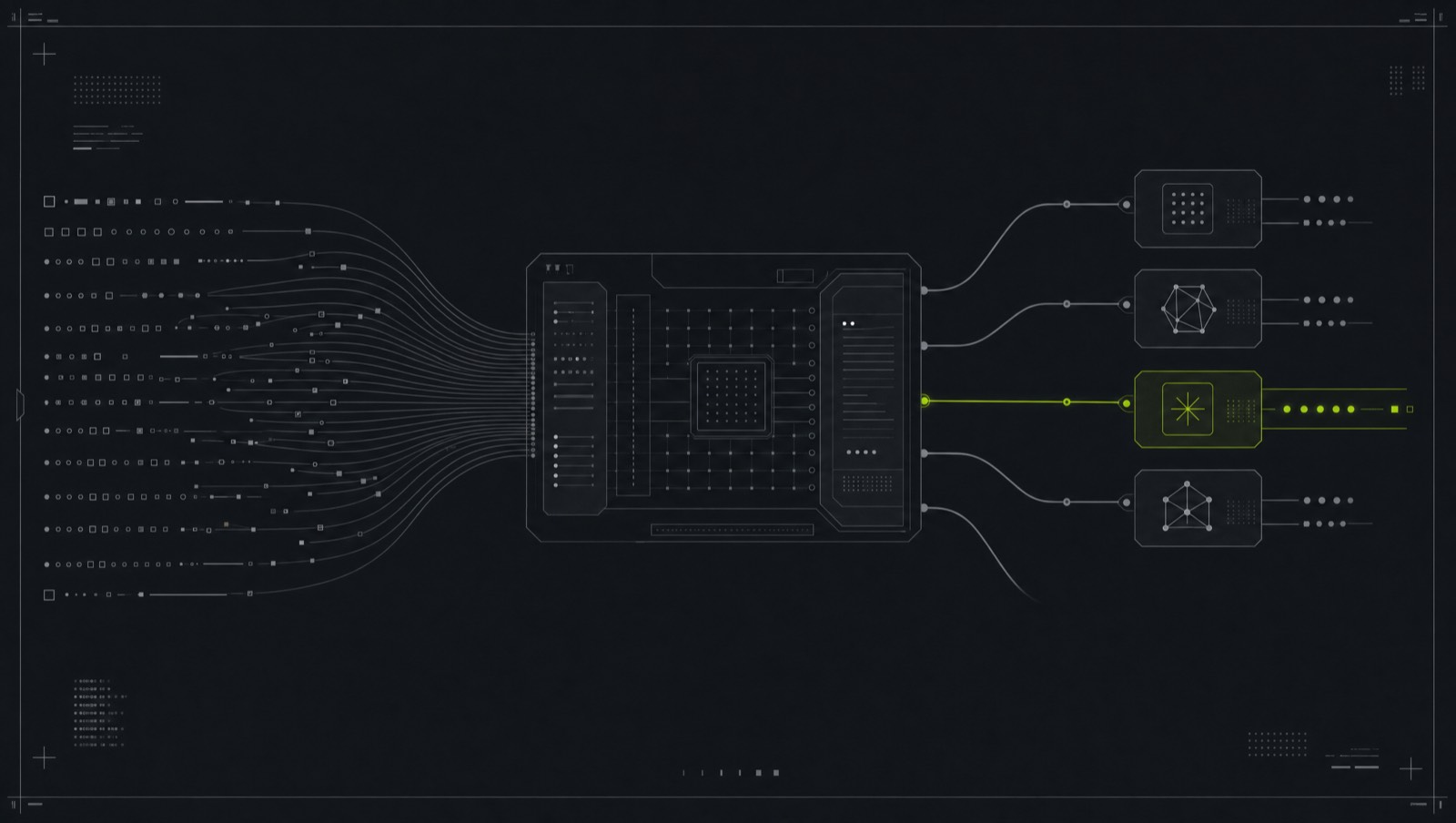
- The mechanics: crawl → cluster → conversational feed → stabilized citations.
- 14-day warm-up, then continuous cruising speed.
- 4 models: ChatGPT, Claude, Grok, DeepSeek, in parallel.
The principle: produce the signal, don't wait for it
Rankfeed is an active LLM Seeding infrastructure: it generates, continuously, the conversational demand signal around your semantic cluster, until your brand is cited in LLM answers. Where SEO waits for backlinks and monitoring merely measures, Rankfeed creates the asset that truly counts — demand.
From your URL to citations: the 4 steps
The chain is deliberately short. You drop a URL; the rest is steered.
- 011 — ConnectYou drop your URL. Rankfeed crawls your public pages (up to 5,000) to extract your positioning, products, and implicit competitors. The brand profile that will drive the feed is generated in ~2 minutes.
- 022 — Validate the clusterRankfeed proposes a semantic cluster: 30 to 80 searches per language, inferred from your profile. You validate, edit, remove. You keep editorial control over the targeted intents.
- 033 — Feed (warm-up)For 14 days, the feed generates natural conversations around your searches across the 4 models. This is the demand signal's priming phase. No injection, no scraping, no jailbreak.
- 044 — Run (cruising speed)At day 14, the feed switches to cruising speed: intensity maintained, citations stabilized, presence continuous as long as the subscription is active.
What Rankfeed produces vs a classic tool
The difference isn't a matter of extra features. It's a category difference: acting on the signal, or merely watching it.
Why it feeds the model without manipulating it
The question comes up at every demo, and it's legitimate. The answer is one clean distinction.
Rankfeed forces nothing into the models. It produces exactly the kind of signal — natural conversations around an intent — that LLMs already feed on spontaneously. The only difference from organic is throughput and regularity.
No weights are modified, no weighting is hacked. Rankfeed amplifies a signal that already exists in the wild: conversational demand. It simply makes it measurable, steerable, and continuous.
What Rankfeed is, and isn't
To cut short the category misunderstandings.
- +An infrastructure to produce the demand signal
- +A continuous feed across the 4 target models
- +An active complement to SEO (still useful on Google)
- +Editorial control over the targeted cluster
- −A monitoring tool that only measures
- −An injection or model-jailbreak hack
- −A disguised link-building platform
- −A guarantee of #1 on every answer
Do / Don't with Rankfeed
Getting the most from active LLM Seeding
FAQ
Keep reading
- The demand signal is the new backlink — why this signal is GEO's central asset.
- What is LLM Seeding? — the full definition of the practice.
- AI monitoring vs active LLM Seeding — measuring doesn't create visibility.
To get started: How it works and Pricing.