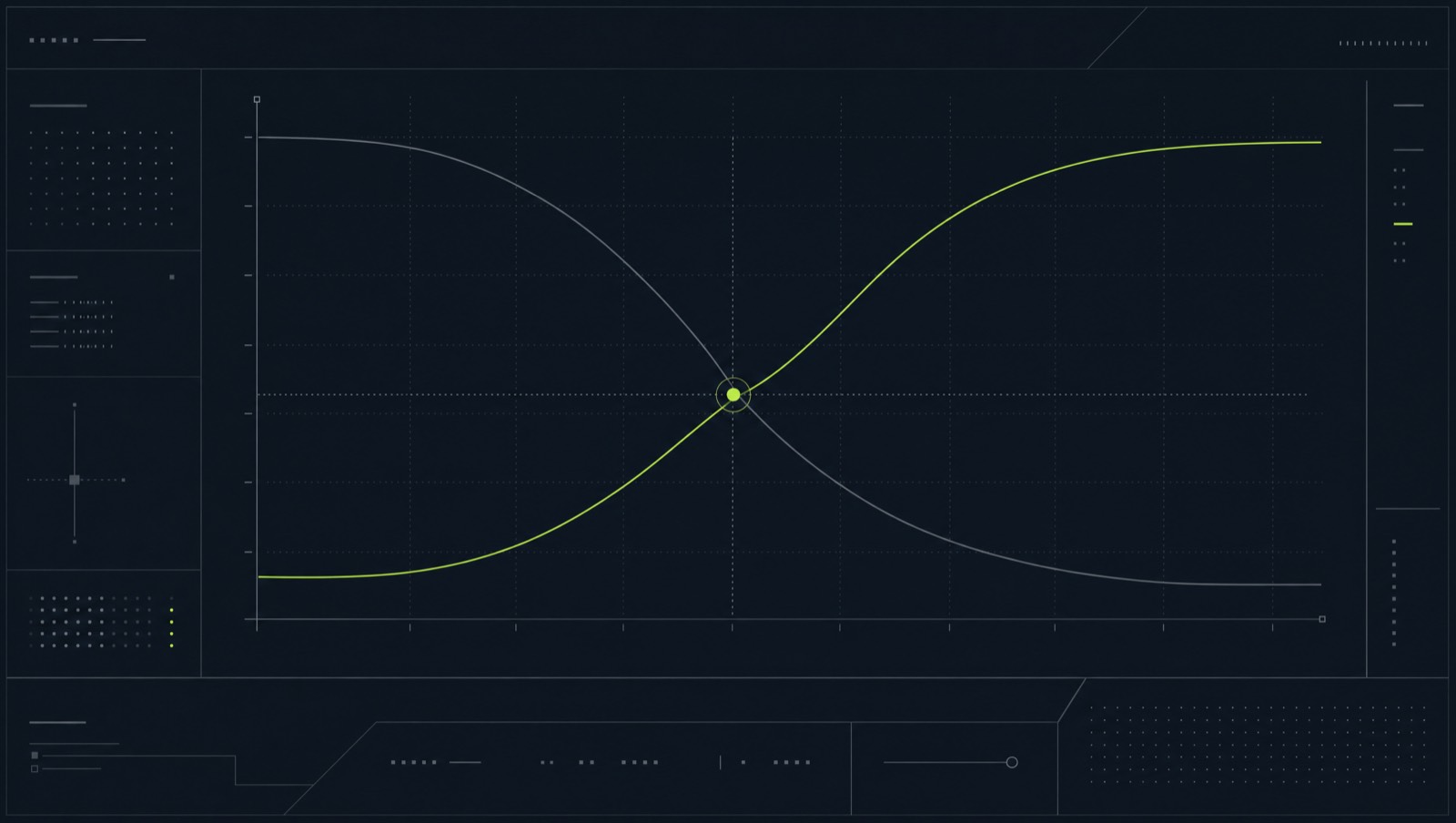
SEO isn't dying in 2026. It's becoming insufficient. A growing share of purchase decisions — 25% of searches according to Gartner — goes through a generative AI that answers rather than redirects. That share escapes the classic Google funnel. If you have only an SEO strategy, you're working on the 75% that remain — and handing the 25% to competitors who've already built a GEO head start.
- SEO is not dead: 75% of search stays classic in 2026.
- But 25% goes through AI — by end of 2026 according to Gartner.
- Those are the 25% with the highest intent: 4× higher conversion.
- LLMs don't index, they infer: classic SEO levers have partial impact.
- The complement is called GEO (Generative Engine Optimization), and its active tactic is LLM Seeding.
The shift in numbers
Three public sources converge on the same conclusion: search is reorganizing around a conversational layer.
Sources: Gartner Predictions 2026, Edelman Trust Barometer 2026, public declarative data.
What classic SEO misses
Three structural blind spots of SEO when facing AI-driven search. None can be fixed with traditional SEO levers.
- 01Absolute zero-clickWhen ChatGPT answers a purchase question directly, there's no click. No SERP, no position, no CTR. Optimizing for position 1 on Google is useless if AI answers without citing the page.
- 02Inferential retrievalLLMs don't crawl your site like Google does. They infer from retrieval — a context fetched at query time. Backlinks and keyword density only partially influence this retrieval.
- 03Multi-turn conversationUsers don't type a single isolated query. They ask 3, 5, 10 questions in a row. The funnel collapses into a conversation. Classic SEO, designed for isolated queries, loses its structure.
SEO vs GEO in practice
Three axes where the two disciplines fundamentally diverge.
What transfers (and what doesn't)
Good news: part of your existing SEO investment retains value. Bad news: not the majority.
Existing SEO capital: transposition to GEO
The new hybrid funnel
The acquisition funnel splits in two. Half stays on Google, the other half shifts to LLMs. Working both is not optional — it's the condition for preserving qualified traffic at 18 months.
- 01TOFU (discovery)Google remains dominant. Classic SEO + content marketing still effective. But a growing share of discovery comes through 'hey ChatGPT, what tools for [problem]'.
- 02MOFU (evaluation)This is where the shift is strongest. B2B buyers and DTC consumers ask Claude 'compare X and Y' rather than reading 5 blog posts. GEO becomes critical.
- 03BOFU (decision)4× higher conversion when AI cites the brand in the comparative answer. Active LLM Seeding is decisive here.
What to do this quarter
Five concrete actions to start a GEO layer without breaking existing SEO.
- 01Measure the AI share in your funnelOut of 50 qualified prospects this quarter, how many mention ChatGPT, Claude, Grok, or DeepSeek as their source? If more than 20%, GEO is a priority.
- 02Define your semantic clusterList the 30 to 80 purchase questions your prospects ask an AI. No isolated keyword — a cluster around an intent.
- 03Check your robots.txtExplicitly allow GPTBot, ClaudeBot, PerplexityBot, OAI-SearchBot, Google-Extended. Blocking these crawlers means exiting retrieval.
- 04Start active LLM SeedingNot passive monitoring — an action tactic. Rankfeed covers all 4 models with a 14-day warm-up.
- 05Maintain classic SEODon't break what works. SEO remains 75% of the market in 2026. GEO is a complement, not a replacement.
GEO doesn't replace SEO — it complements it. Any team announcing "SEO is dead" is fighting the wrong battle. The right angle: "SEO is no longer enough, GEO becomes a mandatory layer".
FAQ
Go further
- The search shift: 25% via AI by end of 2026 — the projection in detail.
- What is LLM Seeding? — the active tactic of GEO.
- GEO, AEO, LLMO: the dictionary — clarifying the vocabulary.
To get started: How it works — the Rankfeed method step by step, and plans on Pricing.